
HOSPITALITY AND COWORKING: FIVE KEYS TO MAKING THE COMBINATION WORK


In France, in the first half of 2024, more than one in five private-sector employees worked remotely, according to INSEE. And they did so at a pace of close to two remote-working days per week. This helps explain the success of coworking spaces. “About 50,000 opened worldwide in 2025, compared with 14,000 in 2017,” according to Mark Watkins, founder of consultancy Coach Omnium. The same trend can be seen in France, where there were nearly 3,400 dedicated coworking venues in 2025 — twice as many as in 2019. Hotels and hoteliers are no exception, as coworking offers a way to generate value from spaces that are underused or not being used to their full potential.
SPACE: CHOOSING THE RIGHT LOCATION
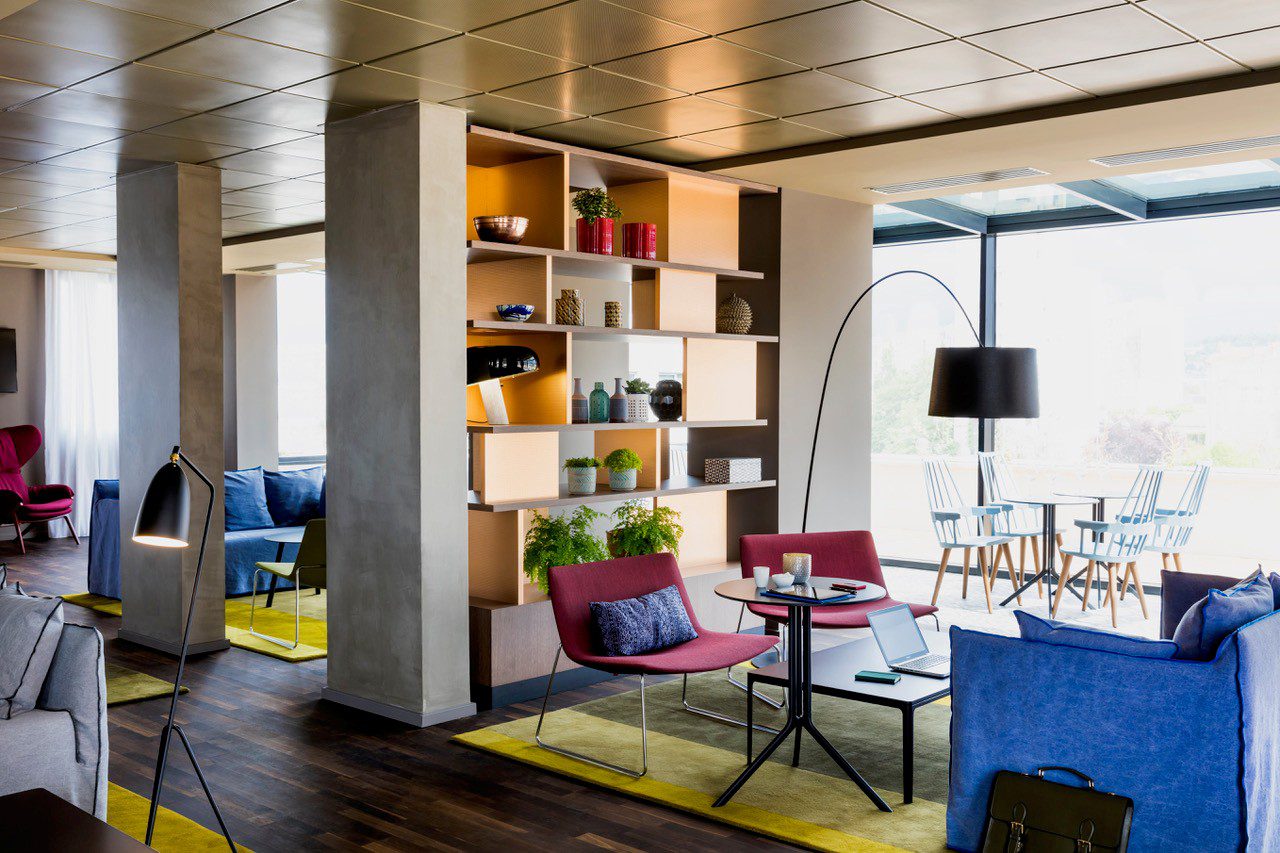
“Any square metre where people can sit down and stay connected can become a workspace,” says Florian Bitker, Managing Director of Drawing Hotels Collection. A view shared by Mark Watkins, founder of consultancy Coach Omnium, who suggests using a lobby, meeting room, rooftop or any other “leftover space” to create a coworking area. He adds that if the space faces the street, like a shopfront, “it is even better for attracting external customers”. “Because people attract people, especially in a lobby: a lively lobby enhances the hotel’s image,” adds Florian Bitker. Mark Watkins also recommends avoiding basements and favouring natural light. Lastly, in terms of floor space, “you should allow 50 to 80 sqm for 10 to 15 workstations”, according to the founder of Coach Omnium.
INVESTMENT: SELECTING THE RIGHT EQUIPMENT
Outfitting a coworking space essentially means providing “tables, connectivity and very high-speed WiFi”, Mark Watkins points out. A printer can be an added bonus, as can ergonomic seating and the versatility of a sofa or armchair, which can be used to relax, have a drink or settle in to work. Florian Bitker also notes that “when renovating a hotel, you should not hesitate to double or even triple the number of power sockets in order to turn the ground floor into a living space that is open and connected to the neighbourhood”.
Worth noting: if you are starting from scratch, coworking brand Deskopolitan estimates the minimum investment required to equip and fit out a workspace at €500 per square metre.
COMFORT: KEEP NOISE UNDER CONTROL
Remote workers may of course be used to wearing earbuds or headphones, especially when taking part in video calls. But acoustics are now just as much a part of the hospitality world as they are of the office environment. To improve sound insulation, Mark Watkins suggests installing modular partitions or creating small booths where people can speak, listen and interact without disturbing others.
F&B: RETHINKING THE OFFER
No coworking space is complete without access to a bar — with unlimited coffee, tea, hot chocolate and water, much like in an SNCF Grand Voyageur lounge — plus a snacking offer, or even a restaurant. Because remote workers may come at any time of day. This is what has prompted, for example, the “Club” spaces in Okko hotels — where guests, even without booking a room, can cowork, network, drink and enjoy a bite to eat — to adapt their buffet offering throughout the day and into the evening. And it works: in 2024, turnover from the group’s F&B offering jumped by 18%.
PRICING: SETTING THE RIGHT RATE
The ideal solution is flexibility, with packages available by the hour, half-day or subscription. Mark Watkins describes it as charging for time spent on site: “The challenge is to strike the right balance between free access for in-house guests and monetisation for external customers,” he adds. His extra tips: “To raise awareness of its coworking offer, a hotel can register on platforms that market this type of service (SoRoom, B’Coworker, Workinspace, etc.). Hoteliers should also make sure these new initiatives — including the creation of a coworking space — are tested by loyal guests, so they can gather feedback and adjust the offer if necessary.”


Comments